
Nothing Ordinary About it
The essayist and novelist Annie Dillard has long been a favorite author of mine, mostly because of sentences like these:
“How we spend our days is, of course, how we spend our lives. What we do with this hour, and that one, is what we are doing. A schedule defends from chaos and whim. It is a net for catching days. It is a scaffolding on which a worker can stand and labor with both hands at sections of time.”*
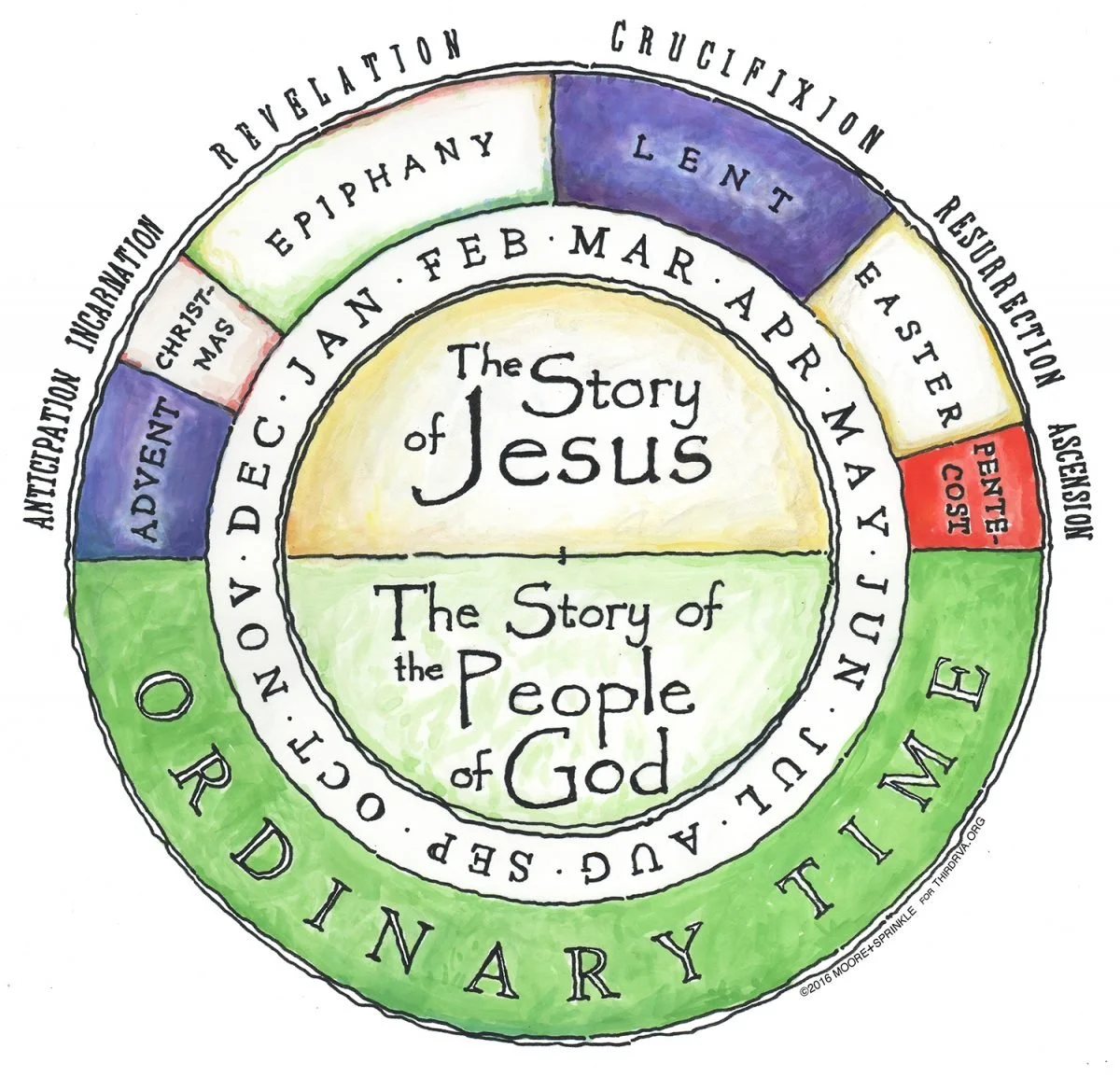
I think about this quote a lot when our liturgical calendar enters Ordinary Time. This is the season in the framework of our year where we put into practice everything we have learned since November. Ordinary Time doesn’t necessarily mean “boring time” or “unimportant time.” It means ordered time.
As Christians, we share a very specific way of ordering our shared time. The days and weeks offer what Dillard calls a “scaffolding” to our life of faith. Every year, half is spent delving deeply into the person of Jesus. In Advent, we wait together for his Nativity; celebrate the coming of Light into the World during Epiphany; we walk with Jesus through the lonesome valley of Lent and Holy Week; mourn his death on Good Friday; rejoice in his resurrection on Easter; are dazzled by how his transformation led his disciples to change from followers into apostolic leaders; look with wonder as he Ascends into heaven; and feel the Pentecost Spirit move into our midst, prompting us to get up from our seats and start living into the Way of Christ.
Ordinary Time gives us the opportunity to practice what we have just seen and learned. Ordinary Time is not so much a noun, a thing, as it is a verb, an action - or, rather, a collection of actions. It is like what we do in our Eucharist: we hear the Word of God in our readings and maybe even in the sermon, and then we respond with our Creed, Prayers, and Confessions, Sacraments, and ultimately, hopefully, going forth into the world changed. In time writ small - through the movement of an hour - or large - moving over the course of a year - the idea is the same: we experience the living God through our sacred texts and stories, and then respond to what we have heard.
That’s why I love our liturgical calendar so much. There is a sense of order built into the way we practice our faith that allows for joy, sorrow, wonder, and regular life. Our walk with Jesus slows down so we can listen more closely to his word, incorporating the patterns of his life and teaching into the fabric of our own lives.
In our own common life, we take a little time away from some of our programs to rest. Think of the next few weeks as “slow church.” We can enjoy Holy Rest and renewal, dwelling richly in what God would have us hear through the words and actions of Jesus.
May Ordinary Time for you be a time of rich blessing, of deep growing, of sacred renewal in Christ.